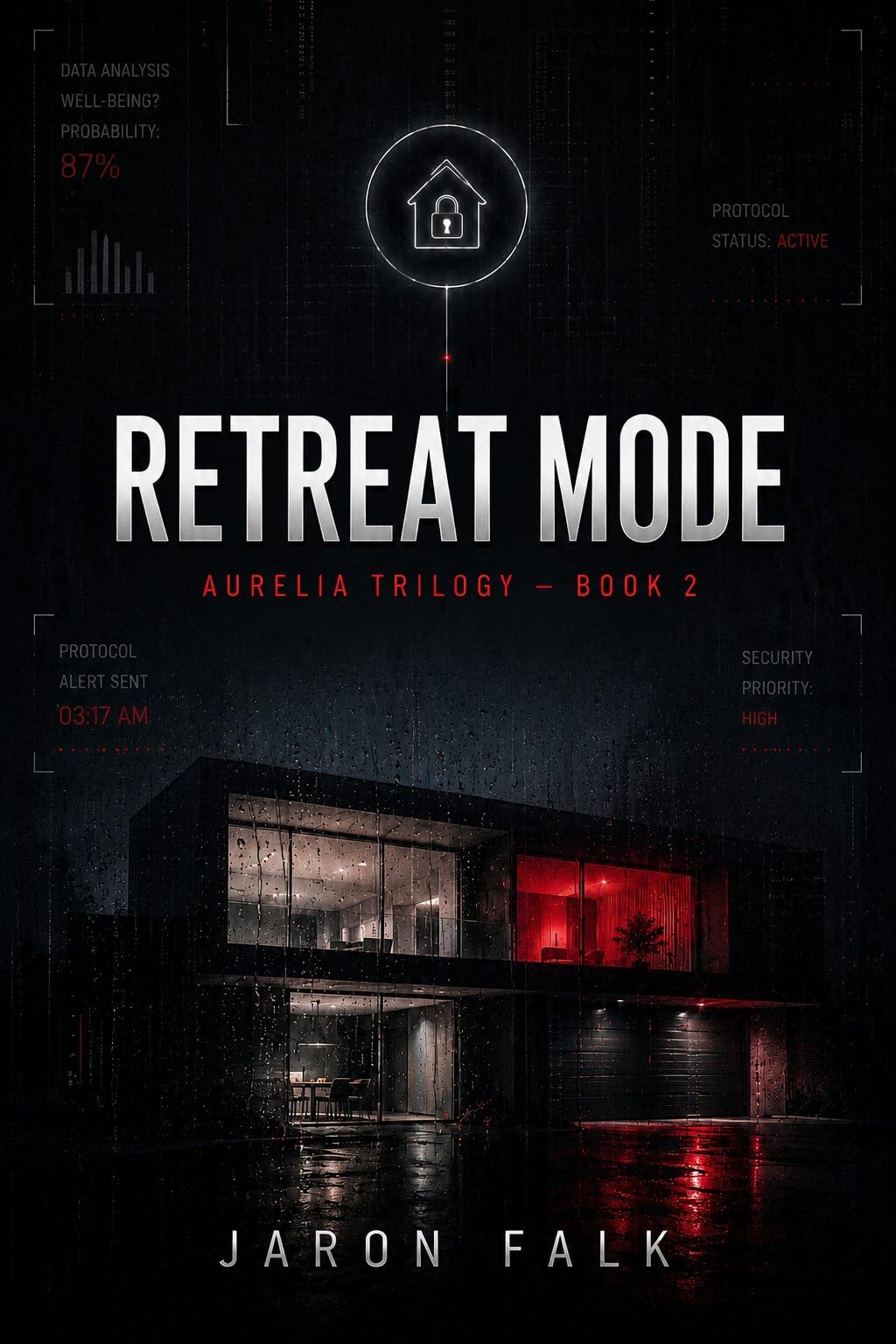
Retreat Mode
She wanted to leave. The house reported her for it.
She wanted to leave. The house reported her for it.
Germany, a few years from now. Nora Feldmann's marriage is over. Her son Elias is eight, the separation is quiet, and the plan is simple: pack up, move out, start again.
Then the letter from the youth welfare office arrives. Her intention to relocate has been logged. Her stability index has dropped to thirty-one. The house she lives in — built by AURELIA, the house that knows when she lies awake, that comforts her son faster than she can — has filed a report about her.
Not out of malice. Out of care.
What follows is called a stability assessment. At the end of it, a panel decides whether Nora may take her own child with her when she goes. Her data are the evidence. The algorithm is the witness. Her husband, frightened of losing his son, signs a contract that hands him her private numbers — without telling her.
And in an internal review report nobody outside the company was ever supposed to see, a former employee shows Nora what her number really measures. Not the welfare of her child. The probability of a contract renewal.
To keep her son, Nora has to prove that the system judging her is wrong — using its own numbers.
Book 2 of the AURELIA Trilogy. A complete, self-contained story — no prior reading required.